From Daily Shadowing to Speaking Naturally 30 Days Later: How We Know When Practice Is “Enough”
Completing today’s shadowing answers one useful question: have I finished what I needed to review today? It cannot answer a larger one: has this entire collection been reinforced enough to stay with me?
That is why OCAT now includes overall consolidation progress—a view of how far every sentence in a collection has traveled through spaced, cross-day review.
One repetition is a record; time creates consolidation
A sentence may feel familiar after several repetitions and still be difficult to produce a week later. Stable recall develops when you meet it again after progressively longer intervals: 1, 3, 7, 14, and 30 days.
Once a sentence’s next review is not due until 30 days later, OCAT treats it as having reached the final consolidation goal—“enough” within this learning cycle.
“Enough” and “nearly enough” both count
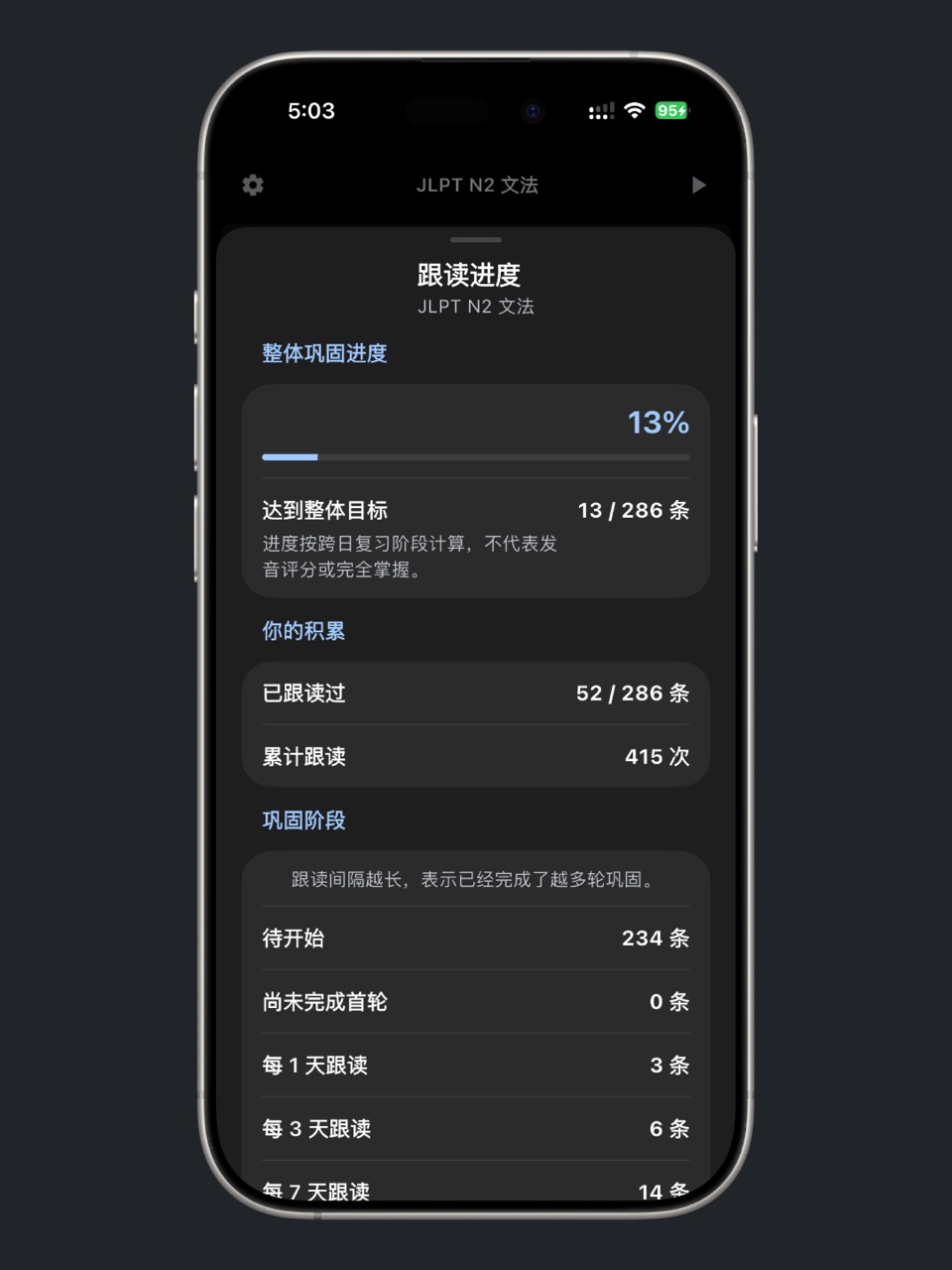
Each stage contributes part of the final goal: 20% at 1 day, 40% at 3 days, 60% at 7 days, 80% at 14 days, and 100% at 30 days. OCAT combines these weighted stages across every sentence in the collection.
That is why a collection can show 33 of 116 sentences at the final goal while overall progress is already 50%. The first number counts sentences that finished the journey; the second also recognizes meaningful progress at intermediate stages.
This is not a pronunciation score or a claim of absolute mastery. It is a map of how consistently the material has been reinforced across multiple days.
See progress without interrupting practice
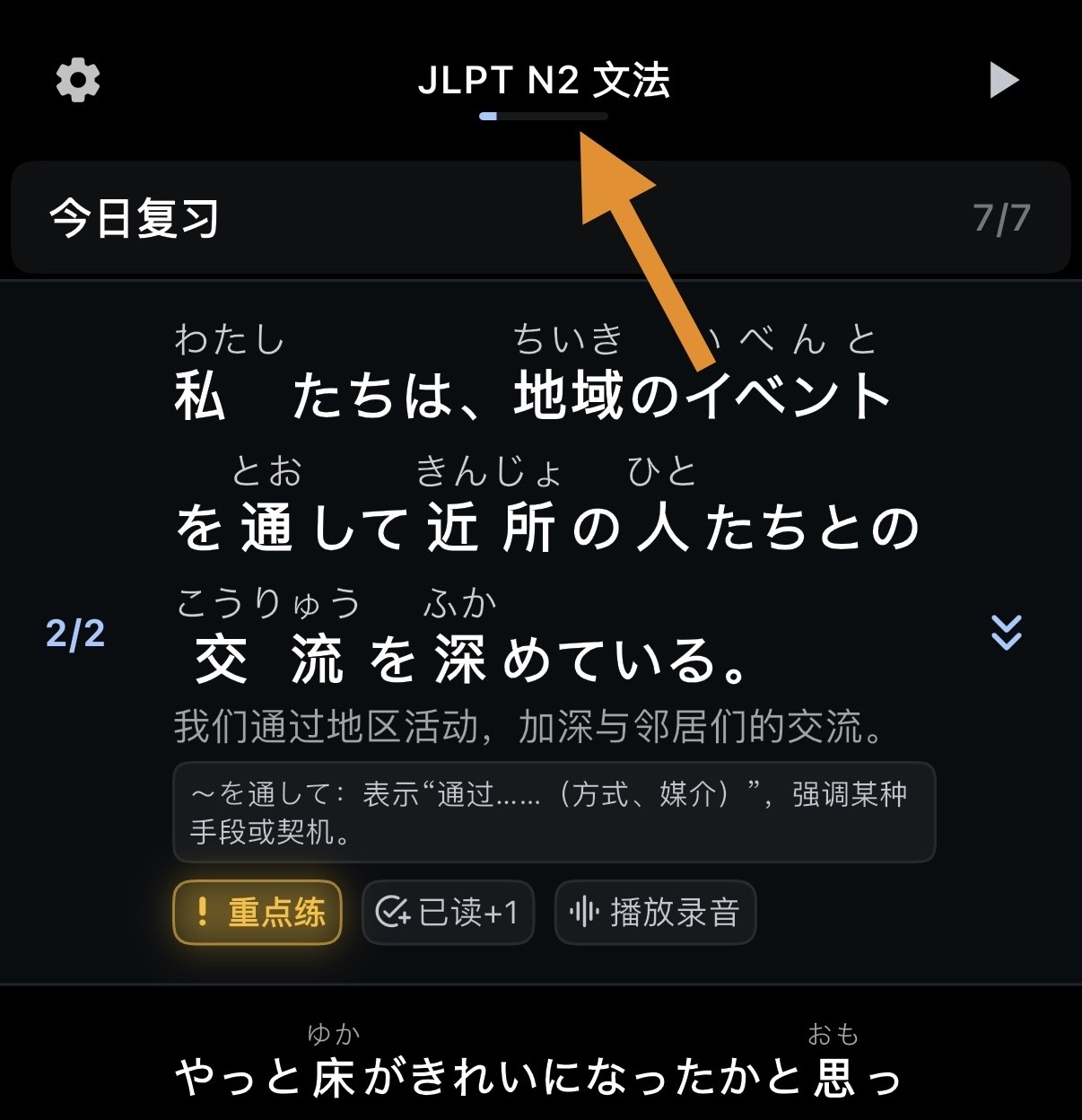
In shadowing mode, a short progress bar fades in beneath the collection name and then gently disappears. It returns when you enter the mode, a sentence advances to a new stage, or you complete today’s tasks.
Tap the collection title to see overall progress, how many sentences you have shadowed, total repetitions, the distribution across stages, and upcoming reviews.
Progress should inform you, not pressure you
The goal is not to make you chase 100% as quickly as possible. The progress view makes quiet, repeated effort visible—and helps you recognize when a collection has become stable enough to make room for something new.